Showing posts with label Singapore. Show all posts

27 December 2015

New Year's Note: What The New Year Means To Me

THE GREATEST GIFT OF ALL
Let’s all think of the New Year as the greatest gift of all. 
By Daniel Goh

In its newness, the New Year is something sparkling clean and elegant, because so blank and new, like a freshly unboxed diary for you to fill in with all the business of the year to come. There’s nothing like crisp, new paper (the smell of it, the feel of it) to make one feel cleansed and ready to do something good. If Christmas is that gaudy, cheaply cheerful commercial item, store-bought, slightly shop-worn, sloppy with drink and eating, glittering with the vulgarity of ostentation and materialism, then the New Year is pristine, freshly-laundered, optimistic. This year, you will get it right; This year, you will finally shed those negative vibes, those dark days and sally forth with energy and luck.

This idea of the New Year was formed when I was still little (so many decades ago!) and going to school was a huge to-do. In great ceremony, the weeks in December marked shopping sprees with mother. Bundles of new textbooks from a growing forbidding list, which we bought from a mission bookstore in Coleman Street, still un-dog-eared, the edges still sharp, filled with things to be learned (I would quickly flip through the books uncomprehendingly when I got home, in awe that I would be learn those things before the year was up). Then, new uniforms were bought from a shop that specialized in school uniforms in Peninsula Plaza, snowy white new shirts with the collars still stiff, and the always too-long blue shorts (I was a precocious dresser!) and down the road new canvas shoes from Bata, new socks with too-tight elastic that caused red welts around my legs for weeks until they grew slack and slightly grey. Handkerchiefs (yes, we used those in the good old days), water bottle, schoolbag were all bought in People’s Park; and this I enjoyed the most, because I got to exercise my fledgling taste for cutesy stuff: I would be entranced with my haul of new matching sets of stationery (pencils, pencil case, eraser, sharpener, notebooks, sketchpad – one year it was all yellow smiley faces, another year all My Melody).

My taste changed with each passing year, and you could see it in the stationery style. I suppose that is called growing up, or growing old. Each subsequent New Year, until today, remains a marker of change for me. Each New Year sees the letting go of old aesthetics and old ideals and ideas, and an embrace of new ones. Each New Year is a chance to shed the outmoded, the tried-but-untrue, the feckless, the negative, the weak (both people, and things). Each New Year, we put on a new moral crisp collar, and pull up new psychological socks. We arm ourselves with a year of new knowledge, we grow taller, we reach new heights.

And that is the real magic of the New Year. Not another round of champagne or fireworks or shopping; Not another holiday, not another calorie spree. The New Year is the greatest gift of all for being another chance to fill your days with meaningful, positive, constructive, beautiful, creative new work, and fill your mind with new ideas and inspiration, and your life with nice, interesting people.
Beginning right here, right now, with this.


25 December 2015

LOOKING FORWARD TO 2016, STAYING POSITIVE

It’s hard to be positive when the world economy is in the doldrums and promises to be bearish for next year. Gold is down, and property prices are falling in Singapore, as they haven’t been in a while, always a bellwether for how things are going. Just look around you – people aren’t shopping even though it’s strenuously promoted at this time of year, and the beautiful malls, decked up for a budget Christmas, are empty.
The year woke up to the passing of Lee Kuan Yew, the defining Big Daddy of Singapore, and thence ensued a long period of mourning and a collective pall. It reflected a global gloom, a sense of the world slowing down, growing old and infirm. The China Boomtown seems to have faltered (if not actually stopped), inspiring a sense of foreboding and uncertainty. Political refugees East and West are being made homeless and stateless, towed out inhumanely, to sea. Not satisfied with systematically destroying a trail of 3,000 year old monuments of human creation in one shocking weekend of barbarity, ISIS followed that up with killing sprees in Paris. In the region, the barbarity of massive forest-clearing goes unchecked, a shocking crime against nature and humankind: global warming ignored, endangered flora and fauna wiped out forever. Then there is the specter of the rise of religious hysteria – in Aceh, gay sex is punished by severe and public whipping; Bangkok is bombed by terrorists. Closer to home, the scandals of City Harvest Church and 1MDB are riveting precisely because of their all-too-human, all-too-close nature.
The wisdom of Buddhist dharma would have us take all this in our stride and accept the realities with optimism. How? Each of us must stay positive and move ahead, work on your causes, fight the good fight, for if you give in to negativity, then all truly will be lost. There is still hope in every situation, but only if you work actively as a living example, a lesson, and a guide. Surround yourself with positive people, people with love in their hearts and clarity in their heads. Don’t give in to the stupid, the morally lazy, and the materialistic. Most importantly, focus on the present and release the past into the past. Learn to live in the present moment.

The haze is gone. 

24 December 2015

Singapore Diva Tracy Huang Sings Again

PEACHES AND CREAM
One of Singapore's earliest pop successes, Tracy Huang has survived the vagaries of the industry by shrewdly shifting her act to the right places at the right time. 
Daniel Goh  fathoms the woman and her image.


"Fat, fat," says Tracy, slapping her thighs. "Fat, fat. I've put on weight,. Three pounds. Fat, here," she says, cupping her cheeks. She lifts her arms and flaps them, making the flesh on her alabaster-white upper arms jiggle. "Fat, fat, do you see?"

Tracy's preoccupation with weight, her looks, her age is understandable. After all, her feminine and fashionable image has always been a strong selling point for her albums. As such, these vanity concerns, inherent in most women, must seem even more vital to Tracy. But today, just for the moment, Tracy, relaxed and light-hearted jokes, "I'm 28, two years older than Alan Tam!" Later, she would give me her age as 39.

Tracy Huang is folded neatly onto a black sofa in the photo studio. She's just completed a photography shoot, part of her efforts to promote her new album Traces of Love, but talk is not about the album. There is nothing so crassly commercial about Tracy.

Even relaxing, her legs are elegantly crossed, ending in pointy, stiletto-heeled ankle boots. She's wearing a two-year old Azzedine Alaia: A black stretch one-piece with a white patent leather belt. "It gives me the illusion of height," she says.

Her hair is straggly now, and is loosely tied back; her eye make-up has run a little, there are black smudges; her lipstick has bled into a crooked pout. Plumes of smoke from her cigarette surround her like an aura.

Tired and slightly dishelleved, even while chain-smoking Virginia Slims, Tracy Huang still exudes a glow. Her skin is not only just fine and creamy white, it has a translucent, jade-like glaze, like rare Song china.

As Tracy talks, her small, white hands flutter about her in arabesque, like twin doves. "Hands are important," she says, flipping through the lyric pages for her new album cover until she finds the illustration of her silhouetted hands, reaching for a bird on a branch. "Look at this picture, I like this very much. Hands can express so much. You don't see my face here at all. But it's me."

Her small, flower-like hands. They are not money-grabbing hands, nor dish-washing hands. No, these are the hands of a princess. I tell her so. "Oh, but I'm not a princess!," she says, laughing. "More like a Cinderella. My father was from Guangdong, a military man, a colonel, so he didn't earn much. My mother was from Shanghai. When they came over to Taiwan from the mainland, they had absolutely nothing, not even a roof over their heads. We were very poor.


"When I was young, I had to help my mother do all the chores. I was the oldest, I had to take care of three baby brothers. All I can remember of my mother from those days was that she was always cooking, cleaning. She'd give me some money and I would have to go to the market to buy vegetables. And I had to cook after school.


"I still found time to play, somehow. I ran around barefoot. I have memories of a little barefoot girl, piggy-backing one of my brothers – maybe that's why I'm so short and all my brothers are so tall!


"I remember one day, while out in the open fields, an aeroplane flew over. At that moment, I made a promise to myself that I would be on that plane someday. I would fly out into the world. And it was a big wish, for a little country girl like me."


She continues in a rush of words; she is enjoying the reminiscences. "Singapore put me on that aeroplane. I was discovered by a talent scout from Neptune Theatre. Here I was, a Taiwanese singer singing English songs – wow! What a novelty, you know. I was billed as 'Angel from Taiwan' at the Neptune!"


That was in 1969. The Angel from Taiwan took flight. Tracy appeared in countless TV variety shows and eventually recorded her own albums, mainly sentimental ballads and cover versions of Olivia Newton-John hits. Over a 43-album career, Tracy established herself as a major star in Singapore, Hong Kong, Taiwan and China. Now she has set her sights on Japan with her album, consisting of English songs by Dick Lee.

Not only was she a major recording artiste, Tracy was also a style icon of the 70s. The image conscious artiste embraced every 'look' that emerged – from frosty purple eye-shadow to padded sweaters, from tattooed eyebrows to cowboy shirts.

The correct 'look' no doubt contributed to her enduring popularity, but she attributes her success to a determination to better herself. "I want to learn something new everyday – then that day is not wasted." And indeed, there were many occasions during my meetings with her when she whips out a little electronic organiser and enters all sorts of information, with a great urgency: names, numbers, movies to see, authors to read, phrases, ideas.


"When I was in school, I only studied music and Chinese folk dance – these were subjects thought to be more befitting to a girl. I learnt to read only after I left school. When I first came to Singapore, I had no friends or family. There were long spaces of time when all the friends I had were magazines and journals and books. I read so much during this time. And all those English programmes on television here. Education is the world around you. It does not mean that if you go to a university you become educated. A lot of people don't realize that experience is so important – you can learn from the people and the environment. I feel that my education is still going on, never stopping."

But something that Tracy feels she has not learnt enough of is studio production and other technical aspects of recording. So last year, she formed her own production company in Taiwan called Inner Music. "I'm at a turning point now – or rather – I'm in a period of flux. I feel that Tracy, as an artiste, is fading out and Tracy, the producer is fading in."

Her energies, and her accumulated knowledge and contacts in the music industries, are now concentrated in production. "It is not that I don't want to perform anymore. Working behind the scenes on a recording is also like performing. What's on show is what you produce, is how Tracy sees it. Inner Voice is where she put together her last three albums – of which two became award winners and hits. Tracy is also casting about for new talents to groom, record and promote.

Next year, in her role as producer, she will launch a 17-year-old Singapore girl, Gina Tan. There are several uncanny similarities between Tracy and her protégé : Tracy herself started her musical career at about the same age (at 16, Tracy was already singing at the American Club). Gina has the same sort of demure, feminine beauty that has served Tracy well; she sounds remarkably like Tracy. They sing like they look: all peaches and cream. There is tinkling clarity in their singing, there is a breathy languidity.


"Also, I really want to act. I really feel like making a movie, something meaningful. Maybe it's a bit late. But I was really inspired by my experience doing the music video which Wong Kar Wai directed."

The video for her Mandarin number entitled Making You Glad has generated more than the usual attention because it features Tony Leung, the star of The Lover.


"All the reporters keep asking me about it, as if Tony Leung was the main thing. At my press conference a reporter asked me if I felt flattered and thrilled that I had Tony Leung to act with in my video. Just imagine.


"I replied, 'How so?' Tony Leung should be the one to be flattered and thrilled."

First published in 8 DAYS Nov 28 – Dec 5, 1992 edition, as a cover story

08 January 2015

PASSAGE OF TIME: Hermes's Must-See Exhibition

Becoming Again, Ran Hwang’s meditation on transience, is a fitting last exhibition at Third Floor, before the gallery closes for a one-year refurbishment. Launched in 2006, Third Floor is a non-commercial art space that promotes contemporary art by commissioning and presenting works in the Hermes flagship store on Orchard Road. Next month, the iconic Liat Towers flagship store closes for a one-year refurbishment. 
It is fitting then, that the last exhibition to show in that space, South Korean artist Ran Hwang’s Becoming Again, is a meditation on time. For indeed the 10 years since the inauguration of Third Floor (located on the third floor of the store) have flown by in a flurry of shows including works by Takashi Kuribayashi (in conjunction with the Singapore Biennale 2006), Laurence Dervaux, Heman Chong, Flavia Da Rin, Luis Terán, Rei Sato, Ming Wong, Yeondoo Jung, Ranjani Shettar, Christine Ay Tjoe, Shinji Ohmaki, Joo Choon Lin, Nadim Abbas and Aiko Tezuka. 
Becoming Again is an immersive multimedia one-work installation, comprising a curved wall of Plexiglas that forms a shimmering screen studded with buttons arranged obsessively as a conflagration of cherry blossoms. As you watch, the blossoms glow with projected, shifting lights, changing colour and shapes in a kaleidoscope of moods; a golden phoenix unfurls its wings to the left and majestically flaps through the cherry forest to the right before a climax of golden showers. The artist, Ran Hwang, swathed in a grey dotted shawl, guides us through the work, a meditation on the cyclical nature of time, the brevity and fragility of life, which is represented by the evolving flowers, first chastely pale, then prettily pink, then autumnal gold, then fading into the void as the cycle begins again. The mythical phoenix – a symbol of grace, infinity and renewal – echoes the transient nature of existence that is at the core of Hwang’s work.    
Why buttons?
Beauty can be found in the most ordinary, and the humble button is a metaphor for the ordinariness of human existence. I want to encourage an appreciation of the simple things we overlook in the frantic course of everyday.
Your work uses a feminine vocabulary, with materials from fashion such as buttons, pins and needles.
My first memories of art were of my father avidly painting Chinese inks and I must have been five or six, very introverted, grinding his ink stone for him. While he painted, I would be drawing by his side. I spent all my time drawing, all through school and one day I started making paper dolls and making Barbie dresses for them and all of a sudden I found myself with friends! I became very popular, and from that time I became very interested in fashion.
When I went to study in New York, I scoured the flea markets and I would find old Chinese pieces of embroidery, and that fascinated me. I found many beautiful used items that were abandoned, and that was when I first discovered the beauty in found objects. I began to use those to create mixed media collages. My first job in New York was interning at an embroidery company. One day in the office, I found a stash of abandoned buttons in a corner. These lifeless, worthless abandoned objects were like me. I was working for a living in the day and could only work on art at night and I identified with the buttons. And so I decided to resuscitate these beautiful discarded buttons as works of art. I began to work more and more with buttons and now I make my own buttons using a traditional Asian method. Each button is made of seven layers of paper, then varnished, made just for me.
You also utilize traditional Eastern imagery.
My dad, a writer who passed away more than 10 years ago, and who never got to see my works, had influenced me a lot in this. His paintings were traditional scholar’s subjects of bamboo and plum blossoms, etc. And after I moved to New York, I began to feel the pull of tradition and history, especially embedded in vintage objects. And if I need to categorize my work, then I’m a Post-Modernist; even if the visuals may be figurative and traditional, but the techniques and medium are contemporary, so this isn’t exactly traditional.
When did you decide that you would be an artist?
I never wanted to be anything else! Right from the time that I was drawing Barbie dresses with my father, I knew I would be an artist. Now I have a permanent team of 25 working for me full time, in both Seoul and New York. I have so much to tell after surviving some really challenging personal times. I’m really grateful that I can create the art that I do.
How does Singapore and this collaboration with Hermes make you feel?
Before I arrived, I thought I would only find buildings here and I was surprised to find so much greenery! There’s also this combination of old and new, the organic and the man-made that I find really interesting. The Third Floor-Hermes space was inspiring because the sides consist of glass. This potentially makes the projected image different during daytime and night. Due to the low ceiling, the work also fills up the exhibition space, so the viewer solely focuses on the work and gets overwhelmed by the scale of it.

Becoming Again is on till 31 January 2015.  Time: 10:30 am to 7:30 pm daily. Third Floor - Hermès, 541 Orchard Road, Liat Towers. Free admission


23 December 2014

3 ALTERNATIVE CHRISTMAS STORIES

JF's Christmas at the Pool
"It's the eve of Christmas eve, 'round 1pm, one of those very quiet times at the pool, and so I was washing up with the shower door wide open, just so to keep an eye on my stuff which I'd left on the changing station ahead of me. You know me, I'm not shy like that. 
So I'm working up a treat with my new handmade geranium essential oil soap, I always use bar soap, I don't fancy gel. And I turn around and suddenly this tiny Chinese Hobbit, not very old, probably in his early thirties, was sitting right next to my stuff, so needless to say I had to keep an eye on him. 

The ACS Swimming Pool where so many things happened in my secondary school days.

Consciously nonchalant, acting oblivious, I continued soaping up and down my smooth flanks and sides, but became increasingly irked when I realised that I was putting on a Christmas show for that guy who kept gawking unabashedly. I really just couldn't hold it in any longer so I said very loudly, projecting across the room: "Excuse me, but what the flying fuck are you staring at?" 
"Ohhh... Ahhh, I wanted to ask you if I can borrow your soap?" he replied lamely.
So I said, "My soap isn't between my legs, you fuck!" 
Still relentless, he had the cheek to say, "Why do you shave down there? It's so ugly..." 

At this, I hurled my bar of soap in his face, hitting his right eye, and only then did he scurry off, Arena trunks, rubber sandals and drippy hair. 
I wasn't a marksman in the army for nothing."
Plaza Singapura in 1977

JZD's Christmas AT THE PLAZA MALL
Last night, amidst the plastic and tin foil-y Christmas decor at the Plaza Mall, JZD told me why he’s perpetually depressed. "It's not just Christmas," he said. As I suspected, it was about his family, a broken home and worse. His depression wasn’t about Nelson as I had thought, whom he had just met, and was all excited about; All anxious and nervous that it may all turn out to be naught. JZD isn’t quite as confident as he liked to present himself to be, but just as insecure as his good friend G, who no longer lives with him. They fought over rent, amongst other things, and G moved back to her parents' last Christmas.
KL model Haikal Hazman Hashim 

AY's Christmas Online
"So I met this dude online last Christmas, and he's a Chinese dude. We have been talking for a year now and indeed, he's very entertaining for a chat buddy. We would chat every day without fail, about this and that; However, when I asked him what race he preferred to date, I felt saddened to learn that he preferred to date a Chinese dude. I know it's his preference and what not, but I’m afraid he won't accept me as a potential date, because I'm not Chinese. I have yet to tell him that I’m Malay, so he doesn’t know this, even though we've been chatting for a year. He’s seen my photos though, but he doesn't seem to think that I'm Malay. 
Should tell him my race or just wait? I'm really confused..."

12 December 2014

MY VERY OWN TARZAN

My Tarzan was a TV Tarzan, and I remember watching this avidly as a kid in the 1970s. It starred the very beautiful Ron Ely (amazingly still alive and still gorgeous!), in the series that ran from 1966-1968, but wasn't broadcast here until the 1970s. It was this version of Tarzan that I got to know first, formatively, as well as getting the first inkling of issues like Nature threatened, the nasty white racist, witch doctors, loincloths, safari suits and various animal attacks embedded in my psyche. Tellingly, I don't have any memories of a Jane, just Tarzan, chimps and natives. 
"I never thought of myself as representing a sex symbol; I didn't see anything attractive in what I was doing or the way I was presented. I just saw it as natural and normal — never beyond that." - Ron Ely

10 December 2014

WHAT IS STYLE?

That is Style: November 2007, when I was still working on it, inventing that genre as I went along. My work, my passion and my style.

22 May 2014

WHAT IS NORMCORE? DO YOU CARE?

NOTES TO THE NEW HIPSTER
Is there to be no end to the indignities to suffered by the chronically clued-in? As the new “Normcore” trend breaks into our collective consciousness, here are some notes on how to be, or not to be.

1. Firstly, don’t worry too much about precisely defining Normcore; Just take it that a silly fashion director somewhere decided to spell Hipster with an ‘N’, and go on making your lunch. It’s only fashion jargon and you have a living to make.

2. The guiding principle for fashion jargon seems always to be on a need to know basis and you, a mere non-fashion professional, need only know this: The fashion pendulum has swung yet again, and now, the epitome of cool is the anti-cool.

3. Normcore is about affordable, bland, functional anti-style. It’s conventional and nondescript drag, stuff you can pull out of your dryer drum anytime and wear with devastating buff nails. 

4. Examples given of this trend seem marked by white sneakers, dull zip-ups and not-skinny jeans, in other words, stuff you wore when you were in NUS. A Normcorer dresses like an undergrad seeking to blend in, rather than stand out. 

5. According to "experts", Normcore is a reaction against the aggressive coolness that relies on vivid difference (studded trophy platforms, K-pop type synchronized dancing, nail art) to a post-cool of authenticity and sameness. To me, this “sameness” thing is troubling. If all around you are synchronized dancing in studded and screaming prints, the Normcorer will not fit in – she will stand out in her discreet denims, plaid shirt-dress and trainers. Is Normcore grunge spelt with an N?

6. The horribly termed Normcore was coined by K-HOLE, a New York-based trend forecasting group. They define it as “a desire to be blank.” But this concept and its assumption that the average hipster isn’t blank would immediately present a challenge for those for which this is relevant. What if you were already blank, as so many hipsters naturally must be? What if you didn’t fundamentally have any identity or persona at all and studied fashion in Perth? What if shopping at Givenchy actually gave your life purpose? Then how do you adopt the Normcore?


7. Who are you if your clothes are brand-free and logo-less? Wouldn’t you be a complete nonentity without a single label signifier? Since Normcore has nothing to do with flashy fashion and more to do with character, it would present a particular challenge to those who would most want to embrace it. The Singapore fashion scene is after all filled with an inhuman army of the vacuous. 

8. So. Instead of scratching your head over every last trend, perhaps you should take a cold shower and then go out there and do something useful with your life.

A version of this piece appears in Style: June 2014.

12 May 2014

VESAK DAY

Vesak Day, celebrated by Buddhists around the world commemorates the birth, enlightenment and nirvana of Siddharta Gautama Shakyamuni Buddha.
However, the date of Vesak Day varies around the world depending on the lunar calendars used in different cultures. In countries following the Western Gregorian calendar, it will happen in May. However, in China, Japan and Korea, Vesak Day is celebrated in April. In Thailand, it is celebrated much later.
On Vesak Day, devout Buddhists will usually visit their temples for prayers and offerings of candles and flowers. Other rituals include bathing of the Buddha statue, sharing in vegetarian meals as well as listening to teachings by monks.
Releasing caged birds and animals is a common practice. It symbolises liberation. But in recent years, eco awareness has resulted in more restraint as most tame animals let into the wild might not survive and those animals that do survive might upset the ecosystem in the wild.
In Singapore, Vesak Day was made a public holiday in 1955. To all the readers of this blog, have a serene and joyful Vesak Day 

08 May 2014

AUDI FASHION FESTIVAL 2014: IS SINGAPORE A FASHION HUB?

The Audi Fashion Festival this month kicks-start Singapore’s busy roster of fashion festivals. But do these retail-centric events make Singapore a true fashion hub? 
There are times when it seems the shows are staged just to make it harder for you to run your errands. If you have a legitimate reason to be in the mall, say to pick up your dryclean, or pop down to the supermarket to forage for food, there’s bound to be women’s magazine editor blocking your path and insisting that you look at how she’s balancing her Blackberry and Starbucks while clutching her trophy handbag and stumbling on her bizarre platforms. 
She can’t walk properly because she's not wearing her prescription glasses and can’t Whatsapp through her gigantic shades while simultaneously pretending there are street-style bloggers snapping at her heels. 
This caricature of a fashion creature is just symptomatic of the derivative nature of our fashion festival scene. They saw it on a blog, and then it slowly dawned on them that they could borrow that sample and toss it together with something from River Island. Same concept writ large: Our fashion festivals are retail events that have all the sound and fury of a real fashion week (read: season-making ones in Paris and Milan) signifying nothing more than our ability to furiously self-promote, and maybe sell a dress or two.  
Surely to be a truly influential fashion capital you need to show newsworthy, influential and groundbreaking collections and not just glorified trunk shows no matter how many red carpets you roll out for C-list celebs and “couturiers”? Peopling the front row with socialites dressed to attend a gala and “editors” whose only ability is shopping, at ticketed consumer events with warmish sponsored cocktails, does not a fashion hub make. It does make for a busy shopping mall, and a great hindrance to real shoppers but that’s about it – otherwise any city with a fashion week (and its attendant pretentious fashionista) can call itself a fashion hub. Bear in mind that places as far-flung as Mongolia and Dakar have fashion weeks too. OK, they probably do call themselves fashion hubs, just as their denizens have Blackberrys and Starbucks.
According to organizers, our shows are in part (a big part) staged for consumers who otherwise might not get a chance to attend a show in London, New York, Milan or Paris. In other words, our fashion shows are obviously ticketed entertainment — just like rock concerts or the circus (if it looks and sounds like a circus, then it probably is one). It is time that our fashion festivals take fashion seriously and promote the local designers and labels that need to be recognized by the tiny pool of influential international editors. We have the talent. We just aren’t pushing them enough. Originality, intelligence and creativity make fashion, not an ability to emulate and “recreate”. Zeal is wasted on pushing that lowest-rung recognizable name as if a gift was being bestowed on the city. So-and-so will close the festival at midnight after a heavy prolonged black-tie supper. Such and such a celebrity will grace the catwalk. How much was he paid? Really? Who cares? Anyone who cares about fashion, any professional whose business it is to care about fashion, would have seen the original show a few months ago, probably in sweatpants on his sofa.

For the rest, there’s Cirque du Soleil Amaluna. 

A version of this essay appears in the May edition of Style magazine. 

03 May 2014

WEEKEND READING LIST: ALL ROADS LEAD TO THAILAND

The last time I was in Bangkok was literally the eve of the anti-government demonstrations last November; the hotel manager called me that morning soon after breakfast and instructed me to pack my bags and leave just as I can because he had received advance information that demonstrators had begun to move towards the road leading to the hotel and would close it to traffic; he couldn't say if things would get violent but was advising guests to evacuate. Something in his tense voice over the phone made me pack my bags at once, and within an hour, I left in the hotel car. Turning back for one last look, I saw the crowd of demonstrators marching in, flags waving, with something of a festive air, but guards were beginning to bar entrances with barricades, and the streets were noisy with shrill whistles and clappers.
I felt like Sigourney Weaver in A Year of Living Dangerously.
Fast forward to (more or less) six months later and I'm simply longing to visit Bangkok again. As you know, for most Singaporeans, Bangkok is simply an obsession and a habit. I have not heard of any Singaporean who didn't like Bangkok; and according to my luxury brands PRs, the local press are always keenly enthusiastic about Thailand press junkets (as opposed to those to Hong Kong and etc ones, although arguably the press here salivate like a komodo dragon at any mention of a junket, with eyes bulging and ropes of sticky drool, cankerous tail waving). I wonder if it is thus for your country?
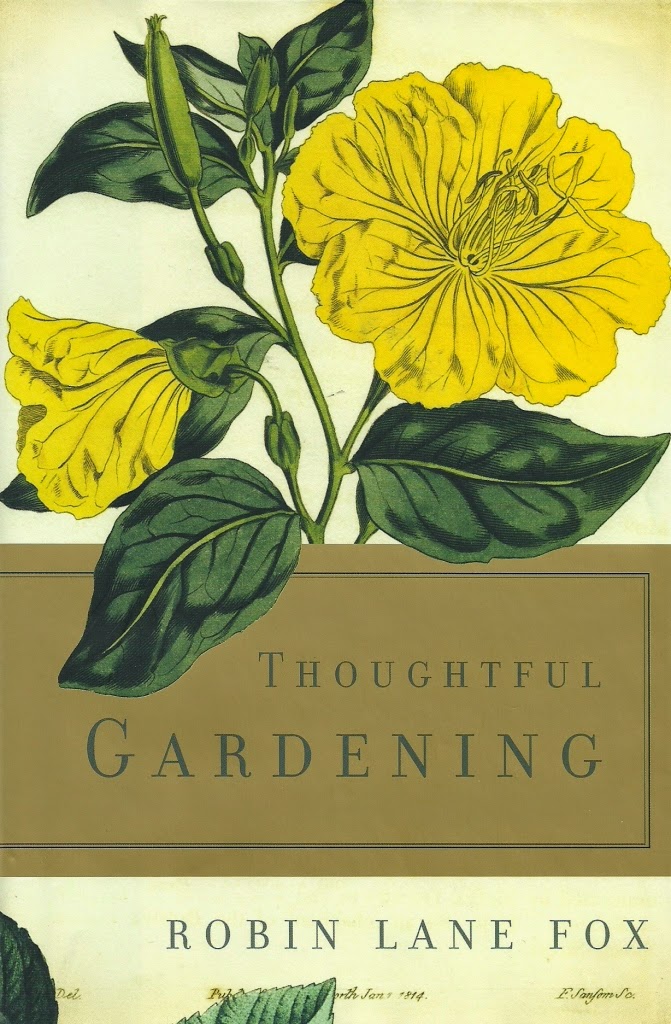
This last weeked I was reading 2011's Thoughtful Gardening by Robin Lane Fox, one of my favourite (living) writers and amongst the riveting chapters on cuttings and pests, Mr Fox remembers his visit to Bangkok as a young journalist. In particular he mentions the Phukae Botanic Garden, a gigantic park in Saraburi, some 60 miles outside Bangkok. Within the city, Mr Fox remembers Wang Suan Phakket (Lettuce Farm Palace), the lovingly tended garden of the late Princess Chumbhot. He took the bus number 3, which delivered him to the door of this "tranquil retreat". 
Reading about these gardens made me simply long to visit Bangkok.

I called my Thai sister Ms O. All my visits to Thailand are preceded by calls to my Thai sister.
She was busy making T-shirts.
What for?
Ms O was involved in what promises to be the mother of all demonstrations; she was making T-shirts for the anti-Thaksin army. Ms O said: "Honey please don't come between 5 May and 17 May. Millions of people are going to demonstrate to oust Yingluck. May not be that peaceful. Come after." 
Sure enough, the papers are full of dire reports on the impending demonstrations which will climax with new, and surely contested, elections in July. 
With this wearying warning in mind, it could be months before I see Mr Fox's Thai gardens.  

07 April 2014

NEW CALVIN KLEIN COLLECTION FLAGSHIP STORE AT THE SHOPPES AT MARINA BAY SANDS SINGAPORE

The Calvin Klein Collection flagship store opens in Singapore today. Housed in The Shoppes at Marina Bay Sands, this concept store reflects the Calvin Klein hallmark minimalism updated with dramatic bold lines, sleek surfaces and immaculate finishes. The new Calvin Klein Collection store follows the brand's global store design. The design features a sleek Italian marble and glass storefront that mirrors the monochromatic surfaces found inside. The quietly contemplative interiors are complemented with state of the art lighting and cleanly graphic furniture.
A salon within the store has the hush of a curated gallery space where pieces from the current collection are highlighted in an intimate setting. The award-winning store concept was first introduced in the Calvin Klein Collection store at Forum 66 in Shenyang, China.
The store carries the latest mens and womens collections including key runway looks designed by Italo Zucchelli and Francisco Costa, and a comprehensive range of shoes and accessories.
This Calvin Klein Collection store joins five other flagship stores globally, and marks the rolling out of three more flagship stores in the region this year, including one each in Hong Kong, Bangkok and Kuala Lumpur. 


Calvin Klein Collection, #01-16, The Shoppes at Marina Bay Sands.